Slotly
An independent capability project using fictional data. Explore the read-only shared sample, or open your own private demo calendar. Registration and login are available; bookings and changes affect only your space. New business items are limited to 10 in a rolling 60 minutes. Spaces expire after 24 hours. Payments are simulated and no real emails are sent.
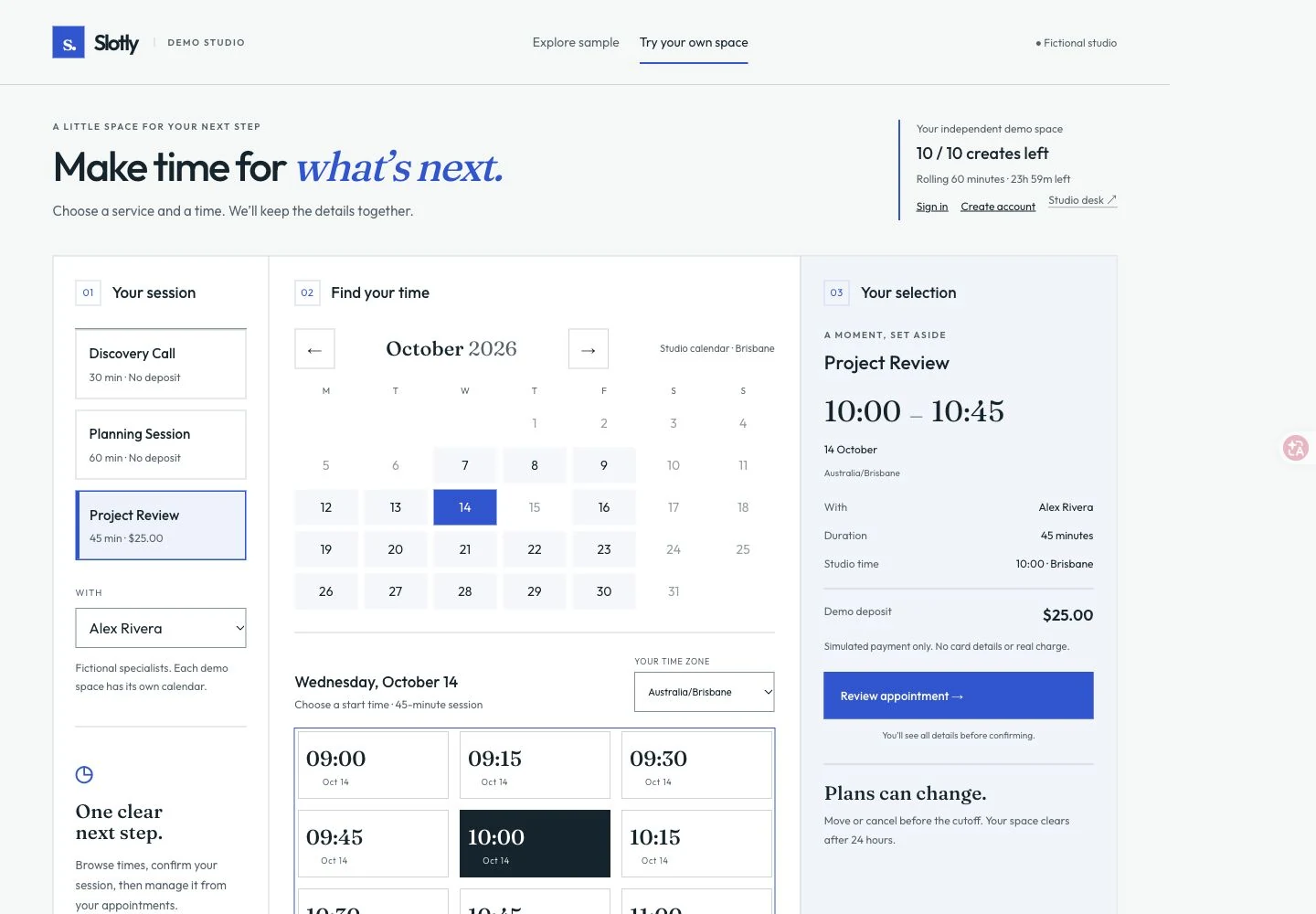
01
Understand
Make time the main task.
Choose a service, a studio date and an available time. The three-part planner keeps the session, calendar and selection together, including your time zone and the studio time.
02
Trust
Keep each visitor’s work separate.
The shared sample stays read-only. A private calendar has its own services, staff and appointments, with clear remaining allowance and expiry time. Account registration retains the same space and does not reset usage.
03
Act
Complete a fictional booking.
Review an appointment, confirm the simulated deposit when required, then view, move or cancel it. The real backend rechecks availability and rejects conflicts, exhausted allowances and expired spaces.
04 / Visual screens
a closer look.
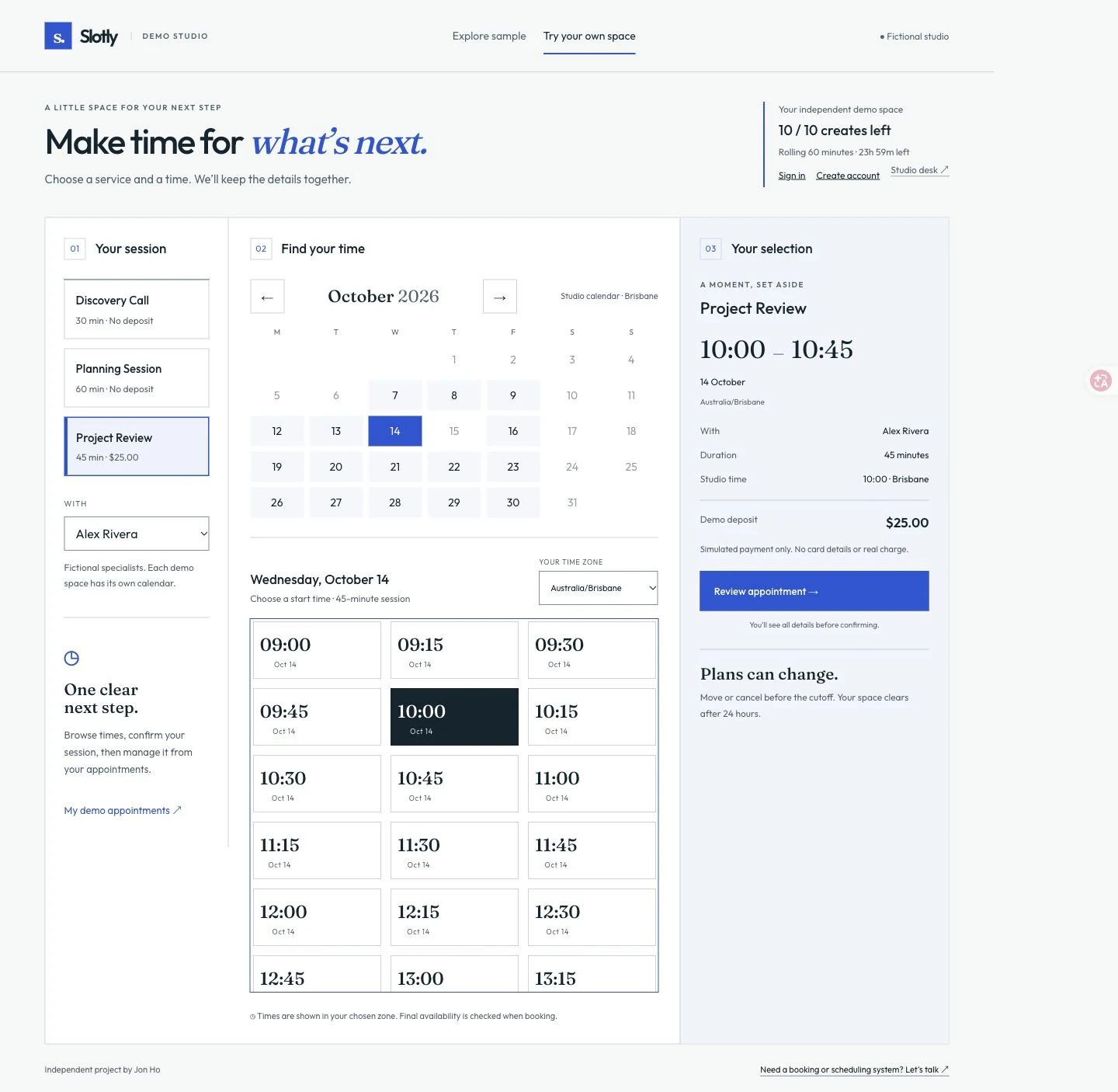
Captured from the deployed HTTPS version. Service, studio date, time-zone selection, remaining allowance and private-space lifetime are shown together.
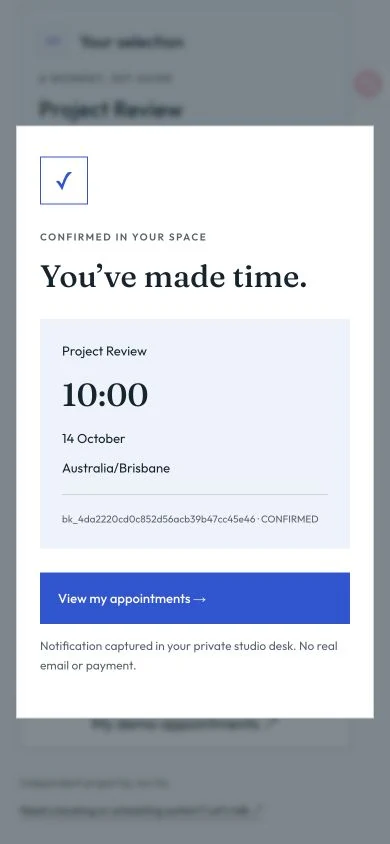
This confirmation follows a real booking request and simulated deposit. No real charge or email was produced.
05 / Build notes
behind
the pages.
- Next.js, FastAPI and PostgreSQL, with separate schema initialization, application and cleanup roles.
- The server selects the visitor space; database row policies and workspace constraints enforce isolation beyond the interface.
- Accepted creations share a durable rolling allowance. Duplicate requests and rejected conflicts do not consume another creation.
- Availability conflicts, private booking changes, registration/login, quotas and expiry were verified against the deployed backend.
- A separate worker handles simulated events; a restricted cleanup process checks expired spaces every 15 minutes. Account identity retention is separate from the 24-hour business space.
- These screenshots come from the real public release using synthetic data. No client results or conversion claims are presented.
Explore the fictional data and interface. Read-only: no bookings, registration, payments or email.
View demo ↗